Every builder has taste. The way you choose corners, copy, layouts, and workflows is yours. Ship Something™'s builder profile watches, learns, and carries that knowledge into every project you start.

Think about working with a new contractor to renovate your kitchen. You spend the first two weeks explaining everything: you prefer matte finishes over glossy, you want the island centered, you hate brass fixtures. By the end of the project, the contractor knows your taste inside and out.
Then you renovate the bathroom. New contractor. You explain everything again. Matte, not glossy. No brass. Centered layout. Every preference, from scratch.
That is what building software with AI feels like today. Every new project, every new session, the agent starts from zero. It does not remember that you prefer sharp corners. It does not know you always reject gradients. It has no idea that you like your pricing section on the homepage, not a separate page.
You end up repeating yourself. Correcting the same decisions. Teaching the same lessons. And the agent never gets faster because it never remembers.
Ship Something™ introduces the builder profile — a persistent record of your taste that the AI agent reads, updates, and carries across every project.
It works like this. The agent watches your decisions and corrections as you build. When you say "no gradient" once, the agent notes it. When you say it a second time, the agent records it. When you say it a third time, the agent asks: "I have noticed you consistently avoid gradients. Should I remember this going forward?"
If you confirm, it becomes a permanent preference. The next time the agent builds a section, a card, a hero — it skips the gradient without asking. That decision is made.
The profile captures four categories of preferences. All of them are taste — subjective choices where there is no objectively correct answer.
How things look. Border radius (sharp, rounded, or pill-shaped). Whether you use gradients. How much whitespace you prefer. How much animation. Whether you default to dark mode or light. What kind of hero section you gravitate toward — big image backgrounds, clean typographic layouts, or side-by-side splits.
How things read. Whether your writing is direct or conversational. Whether your call-to-action buttons say "Sign up" (action-verb) or "Start saving time" (benefit-driven). Whether you keep copy concise or detailed. How formal the language is.
How things are organized. Whether you prefer top navigation or a sidebar. Whether you show data in cards or tables. Whether secondary actions open in a modal, a slide-over panel, or a new page. Where pricing lives. How settings pages are structured.
How you work. Whether you build the marketing homepage first or the core product feature first. Whether you write final copy early or use placeholders and refine later. Whether you iterate deeply on one page at a time or rough out everything first.
This is important. The builder profile only tracks taste. It does not track standards.
Loading states on buttons, accessible labels on form inputs, mobile-first responsive design, proper error handling, security headers — these are best practices that Ship Something™ enforces for every builder through its rules and design system. You do not get to opt out of accessibility because it is not in your "profile." The profile is for preferences, not for cutting corners.
Think of it this way: a restaurant lets you choose your meal (taste), but the kitchen still follows food safety rules regardless of what you order (standards). The profile is the menu. The rules are the health code.
The agent does not jump to conclusions. A single correction does not become a preference. You might reject a gradient once because it did not fit that particular section, not because you dislike gradients in general.
The learning loop has three steps:
Strike one: You correct a decision. The agent notes it internally but changes nothing.
Strike two: You correct the same type of decision again. The agent records it in the profile's corrections log — observable but not yet confirmed.
Strike three: You correct it a third time. The agent asks for confirmation: "I have noticed you consistently prefer X over Y. Should I add this to your builder profile so I remember it across sessions?"
If you say yes, it becomes a permanent preference. If you say no, the agent marks it as context-dependent and stops tracking it.
This prevents the profile from learning one-off decisions. Only genuine, repeated patterns get promoted.
On your first project, the profile starts empty. As you build, it fills in — maybe ten or fifteen preferences by the time you ship. The agent got a little smarter, but you might not notice the difference yet.
On your second project, you copy the profile over. From the very first minute, the agent scaffolds the project differently. It uses your corner style. It writes in your tone. It structures navigation the way you like. It builds in the order you prefer.
You stop correcting. You start moving.
By the third project, the agent anticipates decisions you have not even thought about yet. It knows that when you build a settings page, you group by feature. It knows that your FAQ sections use accordions. It knows you want pricing visible on the homepage.
That is not a template anymore. That is a tool that knows you.
The profile is not a cage. Your taste can change. If you start consistently overriding a confirmed preference — say, you used to avoid animation but now you want subtle transitions — the agent detects the drift and starts a new learning cycle. Three overrides, and it asks: "Your profile says minimal animation, but you have been adding transitions. Should I update this?"
You can also edit the profile directly. It is a JSON file in your project root. Open it, change a value, save it. The agent reads it on the next session start.
In a world where AI makes building fast, the bottleneck shifts. It is no longer "can I build this?" — it is "how many times do I have to explain what I want?"
The builder profile eliminates that repetition. It turns the agent from a capable but forgetful assistant into a collaborator that genuinely knows how you work.
And here is the business insight: this is what turns a template you buy once into a tool you keep coming back to. The more you build with it, the more it knows about you, and the more valuable it becomes. That accumulated knowledge does not exist anywhere else. It is yours, earned through the work you have done together.
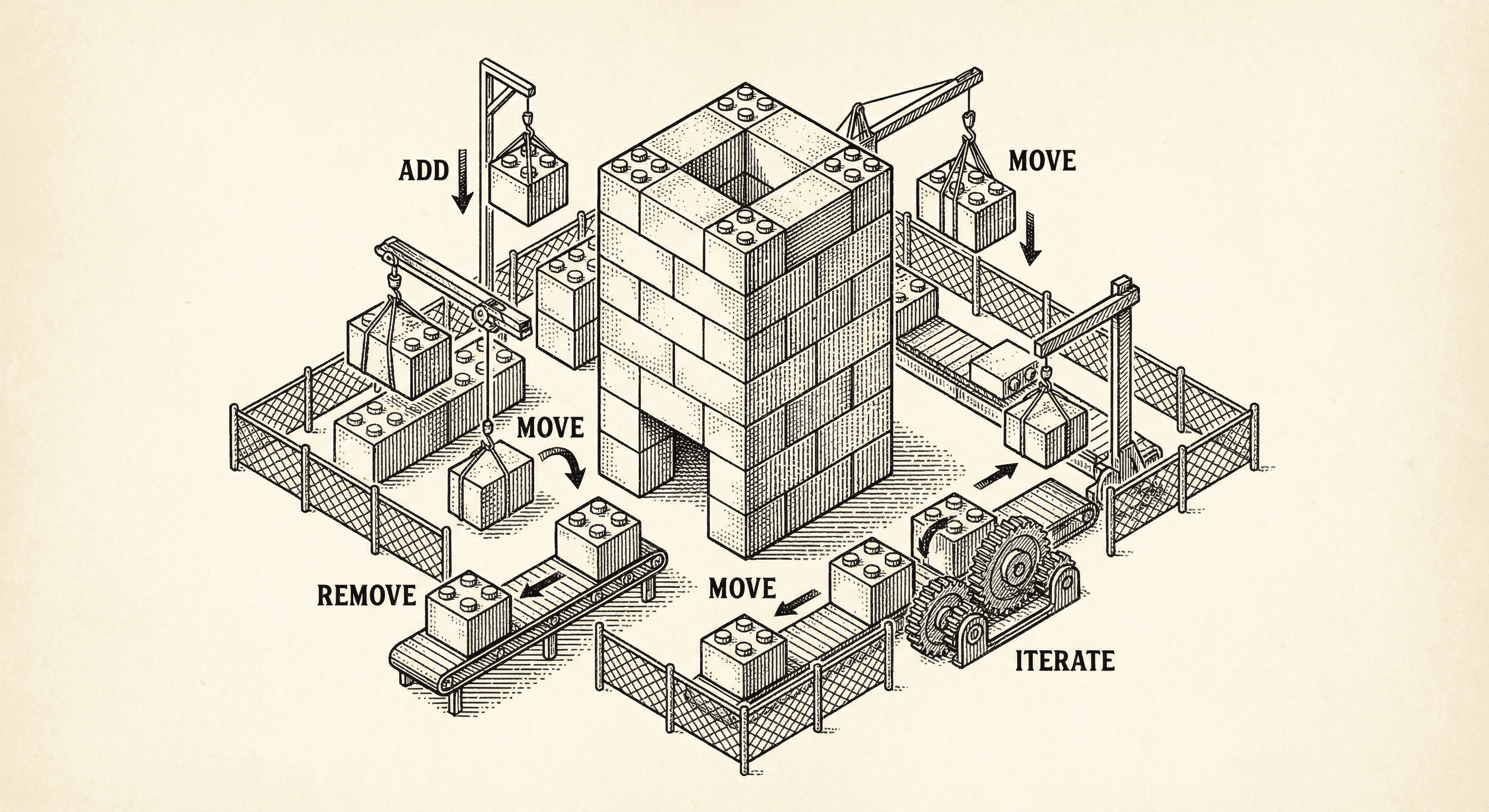
Most templates assume you have a plan. Ship Something™ is built for how you actually work — one feature at a time, changing direction, figuring it out as you go. Here is how five architectural layers keep your codebase healthy while you build piecemeal.
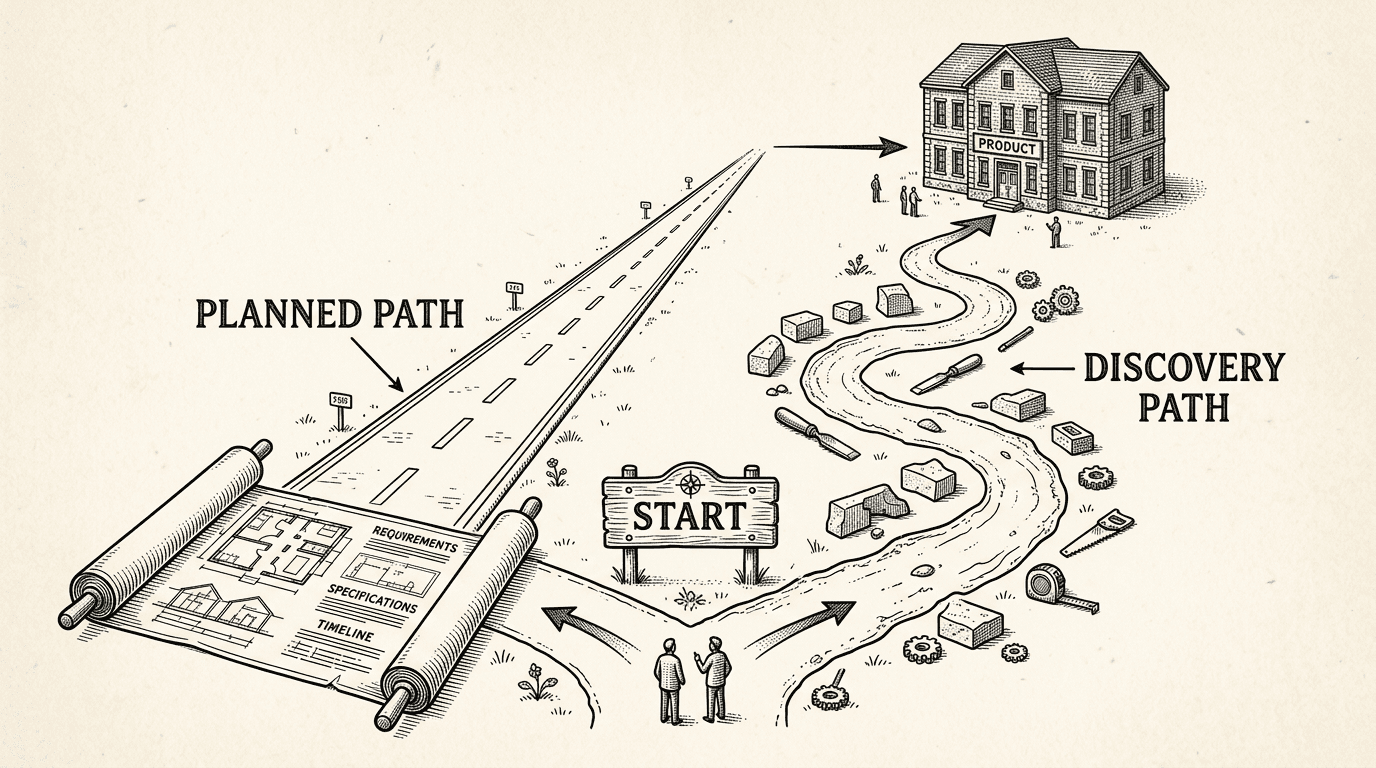
Some builders start with a plan. Others start with an idea and figure it out as they go. Both approaches work. Here is how Ship Something™ and PRD Maker support each one — and why the best path might be a combination of both.
