When to Hire Help (and When to Keep Vibe Coding): A Guide for Solo Builders
You cannot do everything forever. This guide helps you decide when to bring in a developer, designer, or other help — and when to keep building yourself.
Builder Guides
5 min read
Share
Listen
0:00 / 0:00
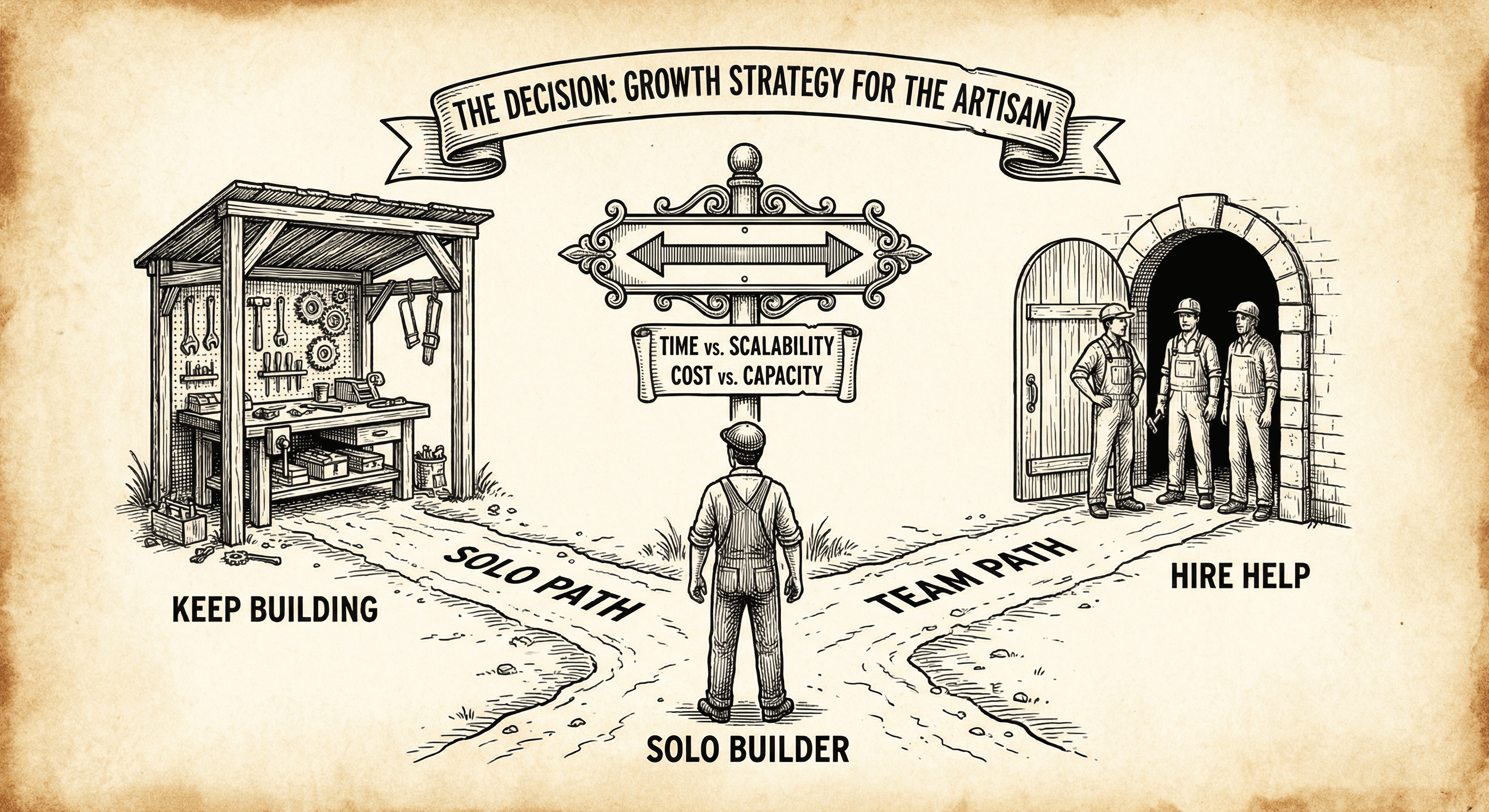
You are building your product yourself — maybe with vibe coding, maybe with a template, maybe with a mix. At some point you will wonder: should I keep doing this alone, or should I hire someone?
There is no single answer. It depends on your goals, your skills, your time, and your budget. This guide helps you decide when to bring in help and when to keep going solo.
When It Makes Sense to Keep Building Yourself
You are still validating — You are testing whether anyone wants what you are building. Until you have evidence (users, feedback, maybe early revenue), paying for help may be premature. Your time and a template are often enough.
The work is in your reach — The next step is a feature you can implement or learn to implement in a reasonable time. Vibe coding and good docs can get you far. If the bottleneck is "I do not know how" and the answer is findable, try it yourself first.
You enjoy it and are learning — If building is part of why you are doing this and you are making progress, staying hands-on is valuable. You will understand the product better and make better decisions later.
Budget is tight — Hiring — even a contractor — costs money. If you do not have it, or you prefer to spend it elsewhere (e.g., marketing, tools), then scope your product to what you can do yourself and use a template to cover the rest.
Staying solo does not mean doing everything from scratch. A template handles auth, payments, and deployment; you focus on the unique value. That can be enough for a long time.
When It Makes Sense to Get Help
A clear blocker you cannot unblock — Something critical (e.g., a specific integration, performance fix, or security issue) is beyond your current skill or would take you weeks to learn. One focused contract or a short-term hire can unblock you faster than you grinding through it.
You are drowning in maintenance — You are spending most of your time fixing bugs, updating dependencies, or fighting the stack instead of improving the product or talking to users. A part-time or contract developer can own "keeping the lights on" so you can focus on product and growth.
You have traction and need to scale — You have users, feedback, and maybe revenue. The next step is more features, better reliability, or a redesign. You cannot do it all and keep the product moving. Bringing in a developer or designer for defined work can multiply your output.
You hate or avoid the work — If you consistently put off technical (or design) tasks and they are blocking progress, hiring someone who enjoys that work can be worth it. Your time is better spent on what you are good at and what only you can do.
What Kind of Help?
Contractor / freelancer — For a specific project: "Build this integration," "Redesign the dashboard," "Fix this performance issue." You define the scope, agree on price and timeline, and keep ownership. Good when you have a clear, bounded need.
Part-time or fractional developer — Ongoing but not full-time. They handle maintenance, smaller features, or technical debt while you focus on product and users. Good when you have some revenue or budget and want to move faster without a full hire.
Technical cofounder — A partner who owns the technical side long-term. They get equity and share in the upside. Good when the product is technical enough that you need a dedicated technical owner and you are willing to share control and upside.
Designer (contract or part-time) — When the bottleneck is "it works but it does not look or feel good," a designer can do a pass on UI/UX or branding. You can then implement with vibe coding or handoff.
Choose based on whether the need is one-off (contract) or ongoing (part-time, cofounder), and whether the main gap is technical, design, or something else.
How to Prepare So Help Actually Helps
Document what you have — A README, a short architecture overview, and how to run the project. A good template already has some of this; keep it up to date. That way a contractor or new cofounder can get going without you explaining everything in real time.
Define scope — "Integrate Stripe subscriptions" or "Redesign the onboarding flow" is clearer than "help with the app." Clear scope reduces back-and-forth and misalignment.
Keep the codebase in shape — Consistent patterns, tests where it matters, and a template that already enforces good practices make it easier for someone else to contribute. You do not need perfection; you need "another person can work in this without breaking everything."
Key Takeaways
Keep building yourself when you are still validating, the work is in your reach, you are learning, or budget is tight. A template plus your effort can get you far.
Get help when there is a clear blocker you cannot solve, you are drowning in maintenance, you have traction and need to scale, or you avoid critical work and it blocks progress.
Match the help to the need — contractor for one-off work, part-time dev for ongoing technical work, cofounder for a long-term technical partner, designer for UI/UX.
Prepare with docs, clear scope, and a maintainable codebase so that when you do hire, they can be effective quickly.
Key Terms in This Article
Solo Founder
Someone building a product alone — handling idea, build, design, and often distribution. Many indie makers and vibe coders start as solo founders.
Technical Cofounder
A cofounder who focuses on building the product — code, architecture, and technical decisions. They often have a background in software development.
Contractor / Freelancer
Someone you hire for a specific task or project (e.g., a design pass, a payment integration) without bringing them on as a full-time or permanent team member.
Scope
The set of features and work you commit to. Knowing your scope helps you decide what you can do yourself and what you need help with.
Opportunity Cost
What you give up by doing one thing instead of another. Spending a month learning a complex system might cost you a month of product or user work.